Great content and SEO aren't separate skills — they're one. You can write beautifully and still get zero traffic if search engines can't find you. And you can rank on page one with content so thin that nobody reads past the first paragraph. The goal is to do both: write content that ranks AND keeps readers engaged.
What You'll Learn:
- How to research and choose the right keywords
- How to structure articles for SEO
- On-page optimization techniques
- Writing techniques that boost engagement
- How to optimize existing content
Step 1: Keyword Research That Works
Every piece of SEO content starts with keywords. But not all keywords are created equal. Here's how to find ones you can actually rank for.
Finding Keyword Opportunities
Start with seed keywords — broad terms related to your topic. Then use these methods to find specific opportunities:
- Google's "People Also Ask": Search your topic and expand the PAA boxes. These are real questions people ask.
- Google Autocomplete: Type your topic and see what Google suggests. These suggestions are based on real search volume.
- Competitor analysis: Use tools like Ahrefs, SEMrush, or Ubersuggest to see what keywords your competitors rank for.
- Google Search Console: Check what queries already bring impressions to your site. You might be close to ranking for terms you didn't target deliberately.
Evaluating Keywords
Not every keyword is worth targeting. Evaluate each one using these criteria:
- Search volume: How many people search for this monthly? Aim for 100-10,000 for newer sites.
- Keyword difficulty: Can you realistically compete? New sites should target keywords with difficulty scores under 30.
- Search intent: Is the searcher looking for information, a product, or a specific website? Match your content to the intent.
- Revenue potential: Will this keyword bring visitors who might click ads or buy products?
Long-Tail Keywords
Long-tail keywords are longer, more specific phrases. "How to get AdSense approved for a new blog" is long-tail. These keywords have lower search volume but much less competition and higher conversion rates.
For new blogs, long-tail keywords are your best path to traffic. Target 10-20 long-tail keywords before going after competitive head terms.
Step 2: Structure Your Article for SEO
How you organize your article matters as much as what you write. A well-structured article is easier for Google to understand and easier for users to read.
Title Tag (H1)
Your title should include your primary keyword, ideally near the beginning. Keep it under 60 characters so it displays fully in search results. Make it compelling — this is what convinces people to click.
Good title formulas:
- "How to [Action]: [Benefit]" — How to Write SEO Content: A Step-by-Step Guide
- "[Number] [Thing]: [Promise]" — 7 SEO Writing Tips That Actually Work
- "[Topic]: [Specific Angle]" — SEO Content Writing: What Google Wants in 2026
Heading Hierarchy (H2-H4)
Use headings to organize your content logically. Your H2 headings should cover the main sections. H3s break down subsections. H4s are for finer details.
For more on this topic, see our guide on Blog Traffic Growth Strategies: 12 Proven Ways to Get More Readers in 2026 →
Rules for headings:
- Only one H1 per page (your title)
- Use H2 for main sections (include keywords naturally)
- Use H3 for subsections within H2s
- Don't skip levels (don't jump from H2 to H4)
- Make headings descriptive — users scan headings to decide if they'll read a section
Introduction
Your intro should:
- Address the reader's problem or question directly
- Include your primary keyword in the first 100 words
- Promise what the reader will learn
- Be 2-3 short paragraphs maximum
Body Content
Break your content into scannable sections. Use short paragraphs (2-3 sentences), bullet points, numbered lists, and subheadings. Most people scan before they read — make scanning easy.
Conclusion with CTA
Summarize key takeaways in 2-3 sentences. End with a clear next step: "Start with X today" or "Read our guide on Y next." Don't just fade out — give readers something to do.
Step 3: On-Page SEO Optimization
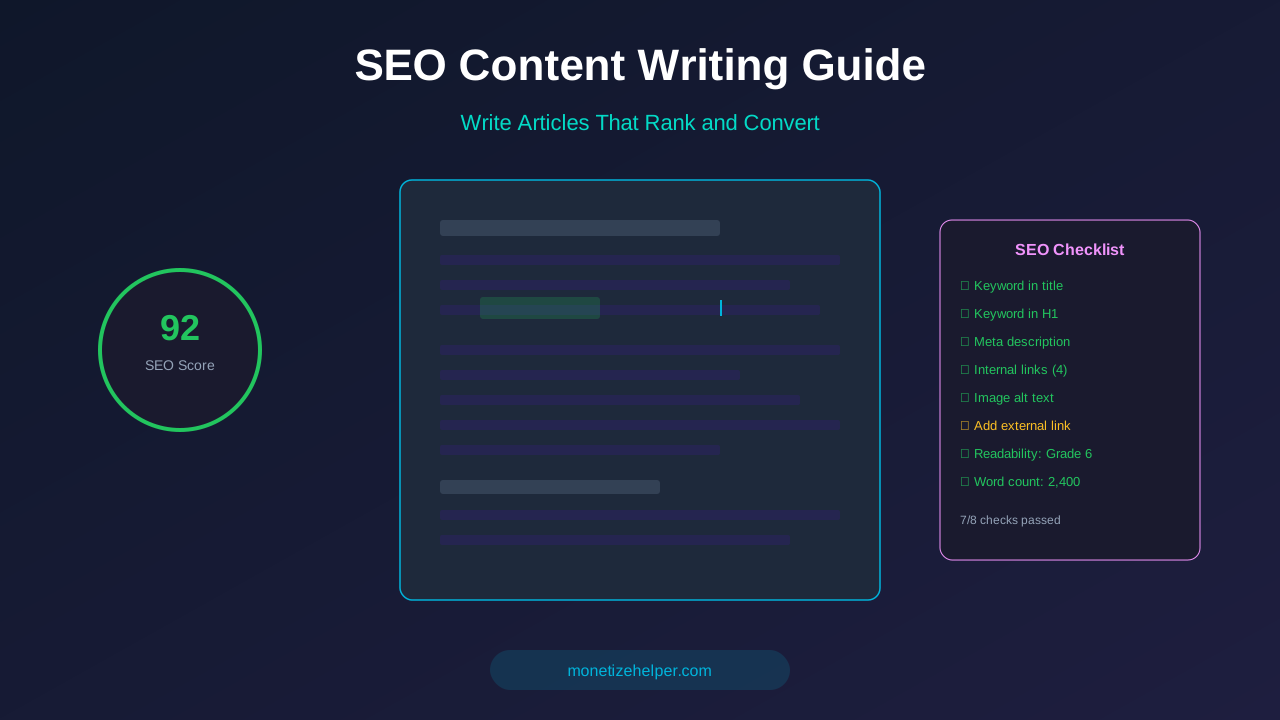
On-page SEO is the technical side of content optimization. These elements help Google understand what your page is about.
Meta Description
Write a meta description that includes your keyword and entices clicks. Keep it under 155 characters. While meta descriptions aren't a direct ranking factor, they affect click-through rate, which is.
Formula: [What the article covers] + [key benefit] + [call to action]
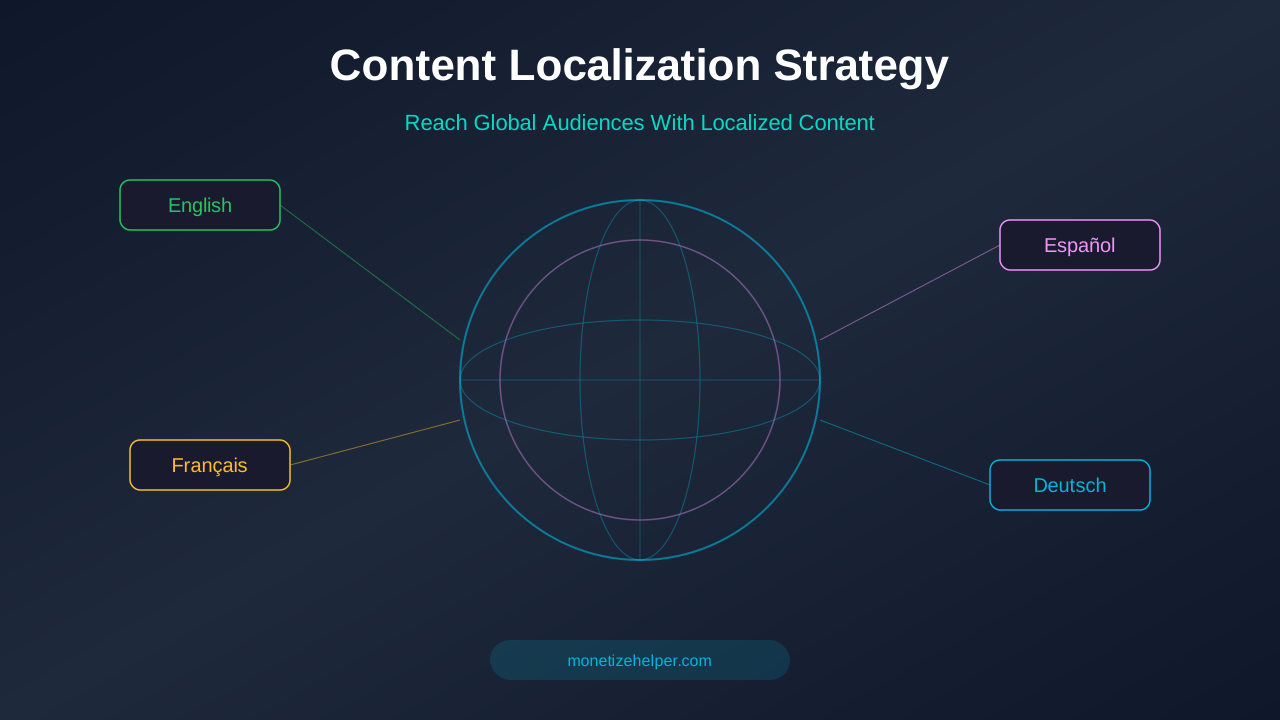
For more on this topic, see our guide on Content Localization Strategy: Reach Global Audiences & Boost Revenue →
URL Slug
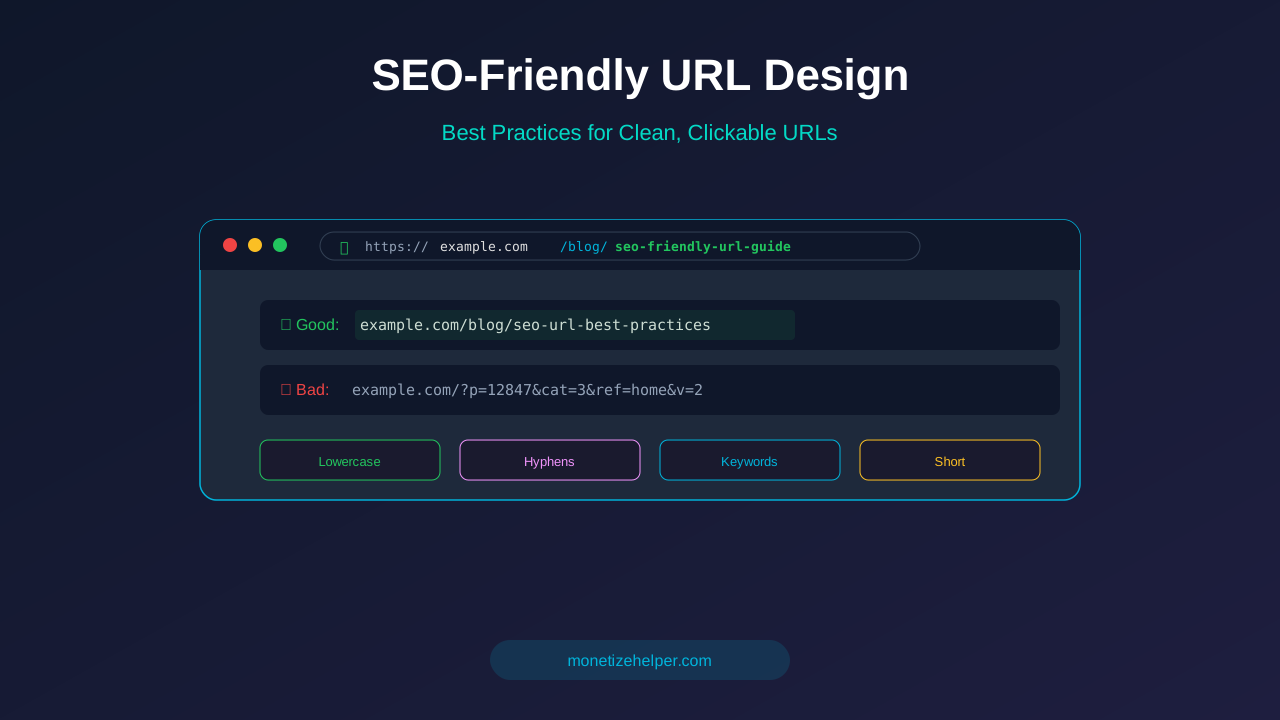
Keep your URL slug short, descriptive, and keyword-focused. Use hyphens between words. Remove stop words. Read our URL design guide for detailed best practices.
Image Optimization
Every image should have:
- Alt text: Descriptive text that includes relevant keywords naturally
- Compressed file size: Under 100KB for standard images, under 200KB for feature images
- Descriptive filename:
seo-content-writing-workflow.svginstead ofimage1.svg - Proper dimensions: Don't load a 4000px image when a 800px version will do
Internal Linking
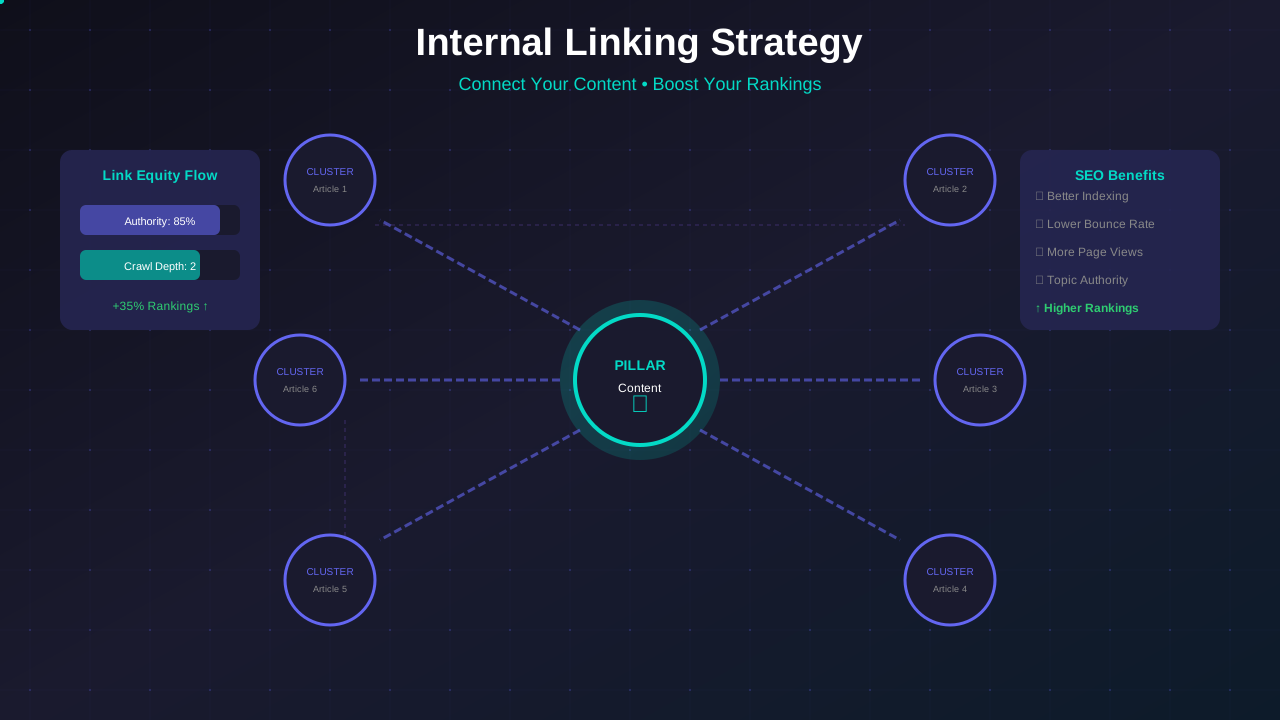
Link to other relevant articles on your site. Internal links help Google discover and rank your pages. They also keep users on your site longer. Aim for 3-5 internal links per article, placed naturally within the content.
External Linking
Link to authoritative sources that support your claims. This builds trust with both readers and Google. Use 2-4 external links per article. Always use rel="noopener" and open external links in new tabs.
Step 4: Writing Techniques That Keep Readers Engaged
SEO gets people to your page. Good writing keeps them there. Here are techniques that boost engagement metrics — and your rankings.
Write at a 5th-8th Grade Reading Level
Simple writing isn't dumbed-down writing. It's clear, direct, and accessible. Use short sentences (10-18 words). Choose common words over jargon. Break complex ideas into simple steps.
Tools like Hemingway Editor or Yoast SEO can check your readability score. Aim for a Flesch Reading Ease score of 70-80.
Related reading: AI Content and AdSense: How to Use AI Safely Without Getting Banned →
Use the Inverted Pyramid
Put the most important information first. Answer the reader's question right away, then provide supporting details. Don't make readers wade through 500 words of background before getting to the point.
Write Scannable Content
Most readers scan before they read. Make that easy by using:
- Descriptive subheadings every 200-300 words
- Bold text for key phrases
- Bullet points for lists of 3 or more items
- Short paragraphs (2-3 sentences max)
- Visual elements like images, diagrams, or tables
Use "Bucket Brigades"
Bucket brigades are transitional phrases that keep readers moving forward:
- "Here's the thing:"
- "But it gets better."
- "Let me explain."
- "Here's why this matters:"
- "The bottom line?"
Sprinkle these throughout your article to maintain flow and retention.
Start Paragraphs with the Key Point
Each paragraph's first sentence should state its main idea. Google often uses the first sentence to generate featured snippets. This also helps scanners quickly understand each section.
Step 5: Optimize Existing Content
You don't always need to write new articles. Updating existing content can be faster and more effective for improving rankings.
Find Underperforming Content
In Google Search Console, look for pages with:
Learn more in Featured Snippets Optimization: Boost Traffic and Revenue Fast →
- High impressions but low clicks (improve your title and meta description)
- Rankings on positions 5-20 (close to page one — a content update could push them up)
- Declining traffic over time (content may be outdated)
How to Update Content
- Update facts and statistics. Replace old data with current numbers.
- Add new sections. Cover subtopics you missed originally.
- Improve readability. Break long paragraphs, add subheadings, insert lists.
- Refresh internal links. Add links to newer articles you've published.
- Update the published date. Only if you've made substantial changes.
- Re-submit to Search Console. Request re-indexing after significant updates.
Content Update Schedule
Set a quarterly content audit schedule. Review your top 20 pages each quarter. Update anything that's outdated, thin, or could be improved. This ongoing maintenance keeps your content competitive.
Common SEO Writing Mistakes
Keyword Stuffing
Using your keyword too many times makes content unreadable and can trigger Google penalties. Write naturally and let keywords appear where they fit. A keyword density of 1-2% is plenty. If a sentence sounds awkward because of a keyword, rewrite it.
Writing for Search Engines Instead of People
Google's algorithms are sophisticated enough to understand natural language. Write for your readers first. If your content is helpful, well-organized, and comprehensive, Google will reward it.
Ignoring Search Intent
If someone searches "how to set up Google Analytics," they want a tutorial — not a sales pitch for an analytics tool. Check what currently ranks for your keyword. That tells you what intent Google has identified for that query.
Thin Content
Articles under 600 words rarely rank well for competitive keywords. They don't provide enough depth to satisfy search intent. That said, longer isn't always better — 1,500 words of focused, useful content beats 5,000 words of fluff.
No Internal Links
Every article should link to at least 3 other pages on your site. Internal links spread authority, help Google crawl your site, and keep users engaged. Make internal linking a non-negotiable part of your writing process.
Frequently Asked Questions
How long should SEO articles be?
It depends on the topic and competition. For most blog posts, 1,500-2,500 words works well. For competitive topics, 2,500-4,000 words may be needed. Check what the top-ranking pages for your keyword have done, and aim to be equally comprehensive, not necessarily longer.
For more on this topic, see our guide on How to Find Trending Topics & Create Viral Blog Content →
How often should I use my target keyword?
Include it in your title, first paragraph, one or two H2 headings, and naturally throughout the article. If your keyword density exceeds 2-3%, you're probably overusing it. Write naturally — Google understands synonyms and related terms.
Should I write for SEO or for readers?
Both. Start by understanding what readers want (search intent), then write content that delivers it in a clear, engaging way. SEO structure (headings, meta tags, alt text) is the framework; quality writing is the content that fills it.
How long does it take for SEO content to rank?
New content typically takes 3-6 months to reach its ranking potential. Some pages rank within weeks for low-competition keywords, while competitive terms may take 6-12 months. Be patient, keep publishing, and focus on quality.
Can AI write SEO content?
AI can help with drafts, outlines, and research. But the best-performing content still needs human editing, expertise, and original insights. Use AI as a tool, not a replacement for your unique perspective and knowledge.
Conclusion
SEO content writing is a skill that combines audience understanding, keyword research, clear writing, and technical optimization. Master these fundamentals and every article you publish has a better chance of reaching the people searching for it.
Start with keyword research. Structure your article with clear headings. Write for humans first, then optimize for search engines. And don't forget to go back and update your existing content — it's often the fastest path to better rankings.
Pick one article from your blog right now and run it through the checklists in this guide. You'll likely find several quick improvements that could boost its performance. Small optimizations add up to significant traffic gains over time.